


By Team Togaa · Updated September 2026 · 18 min read
Quick answer: An anarkali is a long, flared, frock-style kurta worn with slim bottoms and a dupatta. It's formal, graceful and easy to wear, making it ideal for wedding ceremonies, receptions and festive evenings. A lehenga is an ankle-length skirt worn with a blouse (choli) and dupatta. It's the most festive and dramatic of the three, best for sangeets, weddings and receptions. A kurta set (or suit set) is a kurta with matching bottoms and a dupatta. It's the most versatile and comfortable, suited to everything from poojas and festivals to daytime wedding functions. Choose an anarkali for elegant formality, a lehenga for celebration and drama, and a kurta set for comfort and re-wearability.
This guide compares the three in depth: history, silhouette, comfort, formality, which occasions and body types suit each one, fabrics, styling, budget, and how to decide when you're torn.

In this guide
- Anarkali vs lehenga vs kurta set at a glance
- What is an anarkali?
- What is a lehenga?
- What is a kurta set?
- A short history of the three silhouettes
- Comfort: which is easiest to wear all day?
- Formality: which is most appropriate for a wedding?
- Which outfit for which occasion?
- Festival styling: which silhouette when?
- Which suits your body type?
- Fabrics and embellishment
- How to style an anarkali
- How to style a lehenga
- How to style a kurta set
- Budget and re-wear value
- Anarkali vs gown vs floor-length kurta
- Colour guide for each silhouette
- Common mistakes to avoid
- Buying online: what to check
- Caring for festive outfits
- How to decide: a simple framework
- Frequently asked questions
Anarkali vs lehenga vs kurta set at a glance
| Anarkali | Lehenga | Kurta set | |
|---|---|---|---|
| Structure | One long flared kurta + slim bottoms + dupatta | Skirt + blouse (choli) + dupatta | Kurta + pants/palazzo/salwar + dupatta |
| Silhouette | Fitted bodice, flared from the waist or bust | Full skirt, separate top | Straight, A-line or flared kurta |
| Formality | High | Highest | Low to high, depending on fabric and embroidery |
| Comfort | High | Moderate | Highest |
| Ease of movement | Good | Good for dancing, harder on stairs | Excellent |
| Weight | Light to moderate | Moderate to heavy | Light |
| Best for | Ceremony, reception, festive evenings | Sangeet, wedding, reception | Poojas, festivals, day functions, everyday |
| Re-wear value | High | Moderate | Highest |
What is an anarkali?
An anarkali is a women's suit made up of a long, frock-style top and a slim-fitting bottom. The top can range from knee-length to floor-length and often features embroidery. Author Diptakirti Chaudhuri, quoted on Wikipedia, describes it as a "long, flowing, voluminous kurta", and Filmfare notes that it's popular among women of all ages and worn for almost every special occasion, including weddings, parties, festivals and social gatherings.
Where the name comes from
The anarkali takes its name from Anarkali, a legendary young woman said to have been loved by the 16th-century Mughal prince Salim, who later became Emperor Jahangir. Her story, retold in poetry, plays and films, is closely tied to the romance of the Mughal court, and the flowing, graceful garment carries that association.
The anarkali silhouette is also worn as a costume in classical dance, including Kathak, where its flare creates the dramatic swirl of spins.
Anatomy of an anarkali
- Fitted bodice: close through the bust and upper torso.
- Flare: starting at the waist or just below the bust, often made of many panels, known as kalis, to create volume.
- Length: knee-length, calf-length or floor-length.
- Bottoms: usually a slim churidar or straight pants.
- Dupatta: often sheer and embellished.
Togaa's Maya is a golden anarkali with all-over thread and sequin embroidery and a sheer dupatta with scalloped zari edges, designed for festive evenings, intimate weddings and receptions. Saumya is an ivory anarkali with maroon lace detailing, straight ivory pants and a maroon dupatta, made for day weddings.

What is a lehenga?
The lehenga, also called lehnga, langa or ghagra, is an ankle-length skirt from the Indian subcontinent. Wikipedia notes that it became popular in the 16th century, and that traditional embroidery such as gota patti is often used for festivals and weddings.
The lehenga choli
A lehenga is usually worn as part of a lehenga choli: the skirt (lehenga), a fitted blouse (the choli) and a dupatta. The dupatta can be draped in many ways: over one shoulder, over both shoulders, across the front like a saree, or over the head for rituals.
Types of lehenga
- A-line lehenga: fitted at the waist, flaring gently to the hem. Flattering and easy to walk in.
- Flared or circular lehenga: a full circle skirt with maximum swirl.
- Mermaid lehenga: fitted to the knee, flaring below.
- Panelled lehenga: made of vertical panels that add movement.
- Layered lehenga: multiple tiers for volume.
Togaa's Meera is a rust lehenga set with thread and sequin embroidery and floral motifs, paired with an embroidered blouse with an open-back halter tie-up and a dupatta with a scalloped border, made for wedding festivities, sangeet nights and grand celebrations. For a lighter lehenga-style option, Arohi pairs a red square-neck blouse with a panelled skirt with gold lace borders.

What is a kurta set?
A kurta set, also called a suit set, pairs a kurta with matching bottoms and usually a dupatta. It's closely related to the salwar kameez, the traditional tunic-and-trouser combination worn across South Asia.
The many forms of a kurta set
- Straight kurta with straight pants: clean and modern.
- A-line kurta with pants: flattering and easy.
- Kurta with palazzos: comfortable and fluid.
- Kurta with sharara: festive (see our sharara vs gharara vs palazzo guide).
- Peplum kurta with palazzos or pants: modern and Indo-western (see our peplum styling guide).
- Kurta with farshi salwar or dhoti pants: traditional or Indo-western, depending on styling.
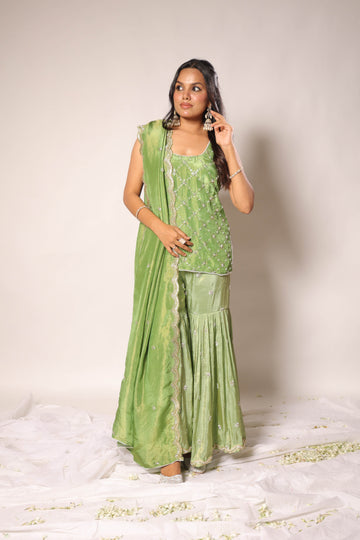
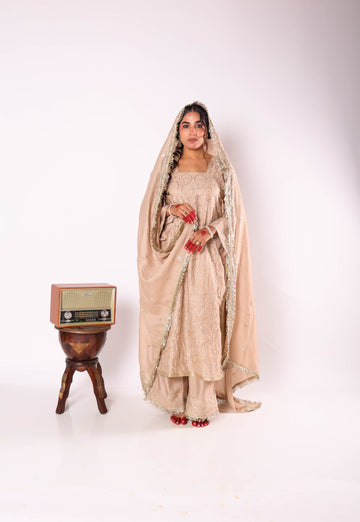
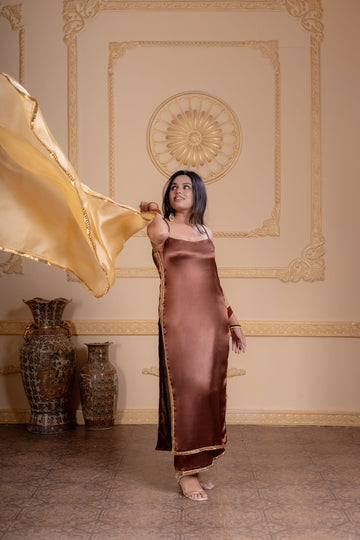
What makes a kurta set festive is the fabric and detailing: chanderi, satin, zari, sequins, hand-worked lace and a statement dupatta. Togaa's Gulrang chanderi sets and Lail satin sets are examples of kurta sets made for weddings and festive days.

A short history of the three silhouettes
Each of these outfits carries centuries of history. The lehenga, as Wikipedia notes, became popular in the 16th century and has long been decorated with regional embroidery. The anarkali's name and flowing form are tied to the romance of the Mughal court. The kurta traces its roots to Central Asian tunics and has evolved over centuries in South Asia into a garment for both everyday and formal wear.
What's changed in recent decades is how freely they're mixed. Today you'll see peplum kurtas worn with lehenga skirts, anarkalis cut as Indo-western gowns, and kurta sets with sharara or dhoti bottoms. Knowing the classic forms helps you choose confidently, and then play with them.
Comfort: which is easiest to wear all day?
For long functions, comfort often decides the outfit.
- Kurta set: most comfortable. Light, easy to sit and walk in, and no heavy skirt to manage. Ideal for ten-hour days.
- Anarkali: very comfortable. It's a single garment with slim bottoms, so there's nothing to hold up. The long flare needs a little care on stairs.
- Lehenga: least comfortable over a long day, though still very manageable. Heavy embroidery and a can-can underskirt add weight, and full skirts need care when sitting, climbing stairs and using restrooms.
If you're attending a long ceremony with lots of sitting, an anarkali or kurta set is usually easier than a heavy lehenga.
Formality: which is most appropriate for a wedding?
All three are appropriate at Indian weddings. The level of formality comes from the fabric, the embroidery and the styling as much as the silhouette.
- Lehenga: the most celebratory and bridal-adjacent. Perfect for close family and for sangeets and receptions. Guests should avoid bridal-heavy red lehengas.
- Anarkali: formal and elegant. Floor-length embroidered anarkalis are as formal as lehengas for most guests.
- Kurta set: ranges from casual to formal. A heavily embroidered chanderi or satin kurta set with a statement dupatta is wedding-appropriate; a plain cotton set is not.
For a function-by-function guide, see what to wear to an Indian wedding as a guest.
Which outfit for which occasion?
| Occasion | Best choice | Why |
|---|---|---|
| Haldi | Kurta set | Light, easy, and you won't worry about turmeric stains |
| Mehendi | Kurta set or sharara set | Comfortable for long sitting |
| Sangeet | Lehenga | Made for dancing and celebration |
| Wedding ceremony (day) | Anarkali or kurta set | Formal but breathable |
| Wedding ceremony (night) | Lehenga or anarkali | Most formal and festive |
| Reception | Anarkali or lehenga | Elegant evening look |
| Nikah | Anarkali or kurta set | Graceful, modest, traditional |
| Diwali and Eid | Anarkali or kurta set | Festive and comfortable at home or visiting |
| Pooja | Kurta set | Understated and practical for sitting on the floor |
| Office festive day | Kurta set | Polished and comfortable |
| Engagement or roka | Anarkali or lehenga | Formal and photogenic |
Festival styling: which silhouette when?
Weddings aren't the only time these three outfits come out. Here's how to choose for India's big festive moments:
- Diwali: an anarkali or embroidered kurta set is ideal for pujas at home and visiting family. Choose gold, deep reds (outside weddings, red is perfect), emerald or wine, and keep the dupatta manageable around diyas and candles. A lehenga suits a Diwali party.
- Eid: anarkalis, sharara sets and elegant kurta sets are all popular. Soft pastels, ivory and jewel tones look beautiful, often with a light dupatta draped over the head for prayers.
- Navratri and Durga Puja: flared lehengas and skirts are perfect for garba and dandiya, where you'll spin and dance for hours. For Durga Puja pandal visits, a comfortable kurta set or anarkali makes long evenings easier.
- Karva Chauth and Teej: red, maroon, pink and green are traditional. An anarkali or embroidered kurta set looks festive and is comfortable for the evening rituals.
- Rakhi and Bhai Dooj: daytime family occasions suit light, bright kurta sets.
- Engagement or roka: if it's your own, a lehenga or statement anarkali. If you're a guest, an anarkali or festive kurta set.
Which suits your body type?
Almost any silhouette can work on any figure with the right cut. These tips help you choose, but comfort and confidence matter most.
Anarkali
- Petite: choose calf-length or floor-length anarkalis in a single colour, with a flare starting at the natural waist rather than below the bust.
- Tall: you can carry floor-length, very full anarkalis beautifully.
- Fuller figures: anarkalis are forgiving; choose a flare that starts at the waist and a V-neckline to elongate.
- Straight frames: the fitted bodice and flare create curves.
Lehenga
- Petite: A-line lehengas with vertical detailing and a high waist lengthen the frame. Avoid very heavy, layered skirts.
- Tall: full circular and layered lehengas look stunning.
- Pear shapes: A-line lehengas balance the hips; add detail to the blouse to draw attention upward.
- Apple shapes: a longer blouse or peplum-style top with an A-line skirt is comfortable and flattering.
Kurta set
- Petite: straight kurtas with straight pants in one colour; avoid very long kurtas with very wide palazzos.
- Tall: long kurtas with palazzos or shararas.
- Fuller figures: A-line kurtas and straight pants in fluid fabrics.
- Any figure: a well-fitted shoulder and bust are the foundation of a good kurta set.
Fabrics and embellishment
Fabrics
- Chanderi: light and breathable, with a soft sheen, ideal for day functions. Chanderi sarees come from Chanderi in Madhya Pradesh.
- Satin: fluid and lustrous for evening wear.
- Georgette: soft and flowing, popular for anarkalis.
- Silk and brocade: rich and traditional, common for lehengas.
- Organza: crisp and sheer, ideal for dupattas.
For a detailed comparison, read our chanderi vs satin vs organza guide.
Embellishment
- Zari: metallic thread embroidery. Zari is traditionally made from fine gold or silver thread.
- Zardozi: heavy metallic embroidery with raised patterns, often on lehengas. See zardozi.
- Sequins: add sparkle for evening functions.
- Thread embroidery: florals and motifs in coloured threads.
- Hand-worked lace: a refined, minimal alternative to heavy embroidery, as on Togaa's Nazākat and Noorani.
- Gota patti: appliqué work with metallic ribbon, traditional in Rajasthan and popular at weddings.
How to style an anarkali
- Jewellery: statement earrings, like chandbalis or jhumkas, with a choker if the neckline is plain. Kundan and polki suit gold and ivory anarkalis.
- Dupatta: a sheer dupatta over one shoulder keeps the silhouette visible; over both shoulders for a traditional look.
- Footwear: heels that keep a floor-length anarkali off the ground, or juttis for calf-length styles.
- Hair: a low bun or soft waves to complement the flowing silhouette.
- Bag: a potli or small clutch.
How to style a lehenga
- Jewellery: layered necklaces for plain blouses; statement earrings and a maang tikka for embroidered or open-back blouses.
- Dupatta: try a one-shoulder drape for dancing, a double drape for the ceremony, or a saree-style drape for a modern twist.
- Footwear: block heels or wedges for stability, especially on lawns.
- Hair: an open-back blouse, like Meera's halter tie-up, looks best with an updo or a sleek low bun.
- Makeup: warmer, bolder tones for evening.
How to style a kurta set
- Dress it up: a statement dupatta, jhumkas, a potli and metallic heels.
- Dress it down: skip the dupatta, add small earrings and kolhapuris or juttis.
- For poojas: a dupatta you can cover your head with, and flats that are easy to remove.
- For the office: a chanderi or cotton-silk set with straight pants and minimal jewellery.
- For weddings: an embroidered set with a zari or organza dupatta, like Pravya, Kusum or Lavanya.
Budget and re-wear value
A lehenga is usually the biggest single purchase and the hardest to re-wear, because it's so clearly a wedding outfit. An anarkali can be worn to weddings, festivals and parties. A kurta set is the most re-wearable, moving easily between poojas, festivals, family functions and office festive days.
If you attend several weddings and festivals a year, a good approach is:
- One lehenga for the biggest functions
- One or two anarkalis for ceremonies, receptions and festivals
- Several festive kurta sets for everything else
You can also re-style each piece: a lehenga skirt with a different blouse, an anarkali with a new dupatta, or a kurta set's palazzos with a plain top.
Anarkali vs gown vs floor-length kurta
Three silhouettes are often confused online:
- Anarkali: fitted bodice, flared skirt-like kurta, worn with slim bottoms and a dupatta.
- Gown (Indo-western): a one-piece dress with a flared skirt, often worn without bottoms and sometimes without a dupatta.
- Floor-length straight kurta: a long kurta that falls straight rather than flaring, worn with pants or palazzos.
If you want traditional elegance, an anarkali is the classic choice. If you want a more western evening look, a gown works. If you want length without volume, a straight floor-length kurta is the answer.
Colour guide for each silhouette
Anarkalis
Anarkalis look beautiful in rich single colours that let the flare shine: gold, emerald, wine, royal blue, ivory with a coloured dupatta, and pastels for day events. Togaa's Maya in gold and Saumya in ivory with maroon show both ends of that range.
Lehengas
Lehengas carry bold colour and contrast well: rust, magenta, red (if the bride isn't in red), emerald, and multi-colour embroidery. Contrast blouses and dupattas add interest.
Kurta sets
Kurta sets suit everything from pastels (lavender, as in Lavanya) to jewel tones (olive, as in Harini) and warm festive shades (orange, as in Kusum). Tonal combinations look elegant; contrast dupattas look festive.
Common mistakes to avoid
- Choosing a heavy lehenga for a long daytime function. You'll be uncomfortable by the afternoon.
- Wearing a floor-length anarkali with flat shoes. The hem will drag. Try it with your footwear first.
- Under-dressing with a plain kurta set at a formal ceremony. Add an embroidered dupatta and statement jewellery.
- Ignoring the neckline. Heavy necklaces on embroidered necklines compete; choose earrings instead.
- Not checking what's included. Some anarkalis and lehengas are sold without the dupatta or bottoms.
- Leaving the fitting to the last minute. Order early and try everything on with your footwear and jewellery.
Buying online: what to check
- Length. Check the anarkali or lehenga length against your height, allowing for heels.
- Bust and waist fit. Anarkali bodices and lehenga blouses are fitted, so the size chart matters. Togaa's size chart covers XS to XXL.
- Weight and fabric. Look for fabric details in the description.
- What's in the set. For example, Maya includes the embroidered anarkali and a sheer dupatta; Meera includes the blouse, lehenga and dupatta.
- Delivery timing. Order well before the event. Togaa ships across India; see our FAQs.
- Exchange policy. Know what happens if the fit isn't right.
Caring for festive outfits
- Dry clean embroidered anarkalis, lehengas and kurta sets.
- Store lehengas flat or rolled, never tightly folded, to protect embroidery.
- Hang anarkalis on padded hangers to keep the flare smooth.
- Wrap in muslin or cotton, not plastic, and keep away from damp.
- Air your outfit after wearing before putting it away.
How to decide: a simple framework
Ask yourself four questions:
- What's the function? Sangeet or reception points to a lehenga. Ceremony or festival points to an anarkali. Day function, pooja or long day points to a kurta set.
- How long will I wear it? The longer the day, the more a kurta set or anarkali makes sense.
- How much will I move? Dancing favours lehengas and shararas; long sitting favours kurta sets.
- Will I wear it again? If yes, an anarkali or kurta set gives better value.
Still undecided? Write to us at support@togaa.in, or browse the Moh edit for lehengas, anarkalis and sharara sets, and the Saadgi edit for easy everyday-to-festive sets.
Final thoughts
There's no wrong choice between an anarkali, a lehenga and a kurta set. Each has its moment. The anarkali brings graceful formality, the lehenga brings celebration and drama, and the kurta set brings comfort and versatility. Choose based on the function, the length of the day, how much you'll move, and how often you'll wear it again.
Key takeaways
- An anarkali is a long, flared, frock-style kurta with slim bottoms: formal, graceful and comfortable.
- A lehenga is an ankle-length skirt worn with a choli and dupatta: the most festive and dramatic.
- A kurta set is a kurta with matching bottoms and a dupatta: the most versatile and re-wearable.
- For long days, choose a kurta set or anarkali; for sangeets and receptions, a lehenga shines.
- Formality comes from fabric, embroidery and styling, not just silhouette.
Frequently asked questions
What is the difference between an anarkali and a lehenga?
An anarkali is a long, flared, one-piece kurta worn with slim bottoms and a dupatta. A lehenga is a separate ankle-length skirt worn with a blouse (choli) and dupatta.
Which is better for a wedding, an anarkali or a lehenga?
Both are appropriate. Choose a lehenga for sangeets, receptions and the most festive functions, and an anarkali for ceremonies, receptions and long days where comfort matters.
What is the best anarkali dress for a wedding?
A floor-length embroidered anarkali with a sheer, embellished dupatta, in a rich or festive colour that doesn't clash with the bride. Togaa's Maya, a golden embroidered anarkali, is one example.
Can I wear a kurta set to a wedding?
Yes. An embroidered chanderi or satin kurta set with a statement dupatta is appropriate for many wedding functions, especially daytime ceremonies, mehendis and poojas.
Why is it called an anarkali?
The anarkali is named after Anarkali, a legendary young woman said to have been loved by the Mughal prince Salim, later Emperor Jahangir.
Is an anarkali comfortable to wear?
Yes. An anarkali is a single flowing garment with slim bottoms, so it's comfortable for long functions. Floor-length styles need a little care on stairs.
Is a lehenga heavy?
It depends on the fabric, embroidery and underskirt. Heavily embroidered bridal lehengas can be heavy; lighter lehenga-style skirt sets are easy to wear.
What is a kurta set?
A kurta set, or suit set, is a kurta with matching bottoms, such as pants, palazzos or a salwar, usually with a dupatta.
Which outfit is best for a petite woman?
All three can work. Choose a single-colour, waist-flared anarkali, an A-line lehenga with vertical detailing, or a straight kurta with straight pants.
Which outfit can I wear again most often?
A kurta set has the highest re-wear value, followed by an anarkali. Lehengas are usually reserved for weddings and big celebrations.
What should I wear under a lehenga?
A well-fitted petticoat or can-can, depending on how much volume the lehenga needs, and comfortable heels or flats that keep the hem just off the floor.
Can I wear an anarkali to a reception?
Yes. A floor-length embroidered anarkali is an elegant, formal choice for a reception.


