


By Team Togaa · Updated September 2026 · 17 min read
Quick answer: Chanderi, satin and organza are three very different fabrics. Chanderi is a light, sheer, breathable handwoven fabric from Chanderi in Madhya Pradesh, best for daytime functions and warm weather. Satin is a weave with a glossy face and dull back that drapes fluidly and glows under evening light, best for evening events and cooler months. Organza is a thin, crisp, sheer plain-weave fabric, best used for dupattas, sleeves and overlays that add structure without weight. For a festive kurta set, choose chanderi for comfort in heat, satin for evening glamour, and organza as the dupatta that finishes either look.
Below, we compare the three fabrics in detail: where they come from, how they feel, how they behave in Indian weather, which occasions suit each one, how to care for them, and how to spot good quality when you're shopping online.

In this guide
- Chanderi, satin and organza at a glance
- What is chanderi fabric?
- What is satin?
- What is organza?
- Comfort and breathability compared
- Drape, sheen and how they photograph
- Which fabric for which occasion?
- Which fabric for which season?
- How to care for chanderi, satin and organza
- How to judge quality when shopping online
- Is chanderi costly?
- How they compare with other festive fabrics
- Common fabric myths
- Styling tips for each fabric
- How Togaa uses each fabric
- A quick buying checklist
- Frequently asked questions
Chanderi, satin and organza at a glance
| Chanderi | Satin | Organza | |
|---|---|---|---|
| What it is | A handwoven fabric from Chanderi, Madhya Pradesh | A weave with a glossy face and a dull back | A thin, crisp, sheer plain-weave fabric |
| Common fibres | Silk, cotton, or silk-cotton | Silk, polyester and blends | Silk, polyester, nylon |
| Feel | Light, soft, slightly sheer | Smooth, slippery, fluid | Crisp, stiff for its weight, slippery |
| Sheen | Soft, subtle sheen | High, glossy lustre | Subtle shimmer, translucent |
| Breathability | High | Low to moderate | High (because it's sheer) |
| Best for | Day functions, summer, long wear | Evening functions, cooler months | Dupattas, sleeves, overlays |
| Main care risk | Delicate weave, zari can tarnish | Snags and water marks | Creases and snags |
What is chanderi fabric?
Chanderi is named after the town where it's woven. Chanderi is a historic town in the Ashoknagar district of Madhya Pradesh, surrounded by hills, lakes and monuments of the Malwa Sultanate and Bundela Rajputs. Madhya Pradesh Tourism describes the town as known above all for its exquisite fabric and a thriving weaving industry.
A weaving tradition centuries old
According to the history summarised on Wikipedia's Chanderi sari page, the weaving culture of Chanderi emerged between the 2nd and 7th centuries, and the Chanderi sari tradition itself took shape around the 13th and 14th centuries. The region sits on the boundary of the Malwa and Bundelkhand cultural regions, and its position on old trade routes helped the craft grow.
Chanderi sarees are one of the earliest products registered under India's Geographical Indication system, listed for 2004–05. A GI tag signals that a product's qualities or reputation are tied to its place of origin, in the same way that Darjeeling tea or Banarasi brocade are.
What chanderi is made from
Chanderi is traditionally woven in three kinds of fabric:
- Pure silk
- Chanderi cotton
- Silk-cotton, a blend that combines silk's sheen with cotton's breathability
Traditional motifs include coins, florals and peacocks, alongside modern geometric designs. Chanderi is also known for its gold and silver zari work and fine brocade borders.
India's handloom sector, of which chanderi is a part, is supported by the Office of the Development Commissioner for Handlooms; you can read more about the sector on the official handlooms portal.
How chanderi feels to wear
Chanderi is light, slightly sheer and breathes well. It has a gentle sheen rather than a high gloss, so it looks elegant in daylight without looking shiny. This makes it one of the most comfortable festive fabrics for Indian summers and long daytime functions.
Because it is lightweight and slightly sheer, chanderi kurtas are usually lined, and chanderi dupattas drape softly rather than holding a stiff shape.

What is satin?
A common misconception is that satin is a fibre. It isn't. Satin is one of the three fundamental textile weaves, alongside plain weave and twill. The satin weave floats threads over several others, producing a characteristically glossy, smooth surface on one side and a duller back.
What satin is made from
Satin can be woven from many fibres:
- Silk satin is the traditional luxury version. Silk is a natural protein fibre, with the best-known silk coming from the cocoons of the mulberry silkworm.
- Polyester satin is more affordable, more durable and easier to care for. Polyester is a synthetic fibre widely used in fashion.
- Blends combine properties of both.
When a label says only "satin", it's describing the weave. Look for the fibre content to know what you're buying.
How satin feels to wear
Satin is smooth, cool to the touch and fluid. It drapes beautifully, flows as you move, and has a rich lustre that catches light. It's especially flattering in photographs under evening lighting.
On the downside, satin is less breathable than chanderi or cotton, can feel warm in peak summer, and snags more easily because of those long floating threads. Wikipedia notes that satin "tends to snag", which is why careful handling and storage matter.
Where satin shines
Satin is the fabric of evening celebrations: sangeets, receptions, festive dinners and winter weddings. It also works beautifully for minimal, modern ethnic wear, where the fabric's glow does the work instead of heavy embroidery.
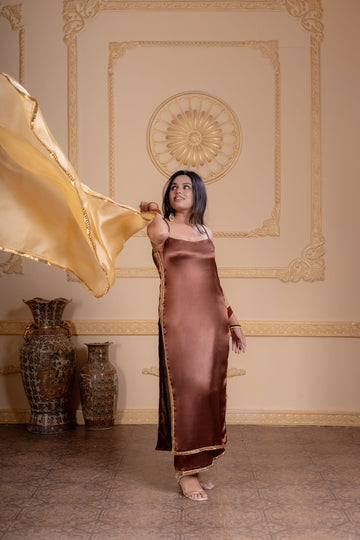
Togaa's Lail edit is built around satin: Nazākat is a black satin A-line suit set with hand-worked lace, Saanjh is a navy satin suit set with gold lace trim, and Noorani is a mocha satin kurta set with hand-embroidered lace.

What is organza?
Organza is a thin, plain-weave, sheer fabric traditionally made from silk. Many modern organzas are woven from synthetic filament fibres such as polyester or nylon. It's distinguished by its crisp hand, its stiffness relative to its weight, and its slippery surface texture.
How organza is used in Indian wear
Because organza is crisp and sheer, it holds shape without adding weight. That makes it ideal for:
- Dupattas that float and frame an outfit
- Sleeves and overlays that add volume
- Borders and panels that add structure
A silk organza dupatta is one of the easiest ways to make a simple kurta set look special. It adds texture and a sheer, luminous layer, while staying featherlight.
How organza feels to wear
Organza is light and airy but crisp, not soft. It can feel slightly scratchy against bare skin if it's a stiff synthetic, which is why it's more often used for dupattas and overlays than for pieces worn directly against the body.
Several Togaa sets pair satin with an organza dupatta for exactly this reason: satin for the fluid base, organza for a light, structured finish. Nazākat comes with a mustard silk organza dupatta, and Ruhani with a baby pink silk organza dupatta.

Comfort and breathability compared
If you're choosing an outfit for a long day, comfort matters as much as looks.
- Chanderi is the most breathable of the three for full outfits. It's light, lets air through, and suits heat and humidity.
- Organza is breathable because it's sheer, but it's rarely worn as a full garment against the skin, so its comfort mostly depends on what's underneath.
- Satin is the least breathable, particularly polyester satin. It can feel warm in peak summer, though it's comfortable in air-conditioned venues and cooler months.
For an outdoor daytime function in May or June, chanderi is the safer choice. For an evening event in an air-conditioned hall or a winter wedding, satin is perfectly comfortable.
Drape, sheen and how they photograph
Different fabrics create very different silhouettes.
Drape
- Satin has the most fluid drape. It follows the body and moves with you.
- Chanderi drapes softly but holds a little more body, especially when lined.
- Organza doesn't drape so much as stand. It holds shape and creates volume.
Sheen
- Satin has a high, glossy lustre.
- Chanderi has a soft, subtle sheen, sometimes lifted by zari.
- Organza has a translucent shimmer.
In photographs
Satin glows under warm evening light and flash. Chanderi looks elegant and refined in daylight. Organza dupattas photograph beautifully when backlit, adding a soft, ethereal layer. If photos matter to you, think about the lighting at your event.
Which fabric for which occasion?
| Occasion | Best fabric | Why |
|---|---|---|
| Haldi (daytime, outdoor) | Chanderi or cotton blends | Breathable, easy in heat |
| Mehendi | Chanderi or light satin | Comfortable for long sitting, festive colours |
| Sangeet (evening) | Satin with sequins or zari | Evening sheen, moves when you dance |
| Wedding ceremony (day) | Chanderi or silk | Refined, traditional, breathable |
| Wedding ceremony (night) | Embroidered fabrics or satin | Rich, formal, photographs well |
| Reception | Satin, embroidered anarkali or lehenga | Evening glamour |
| Pooja or family function | Satin or chanderi suit set | Understated, elegant |
| Office festive day | Chanderi or cotton-silk | Light, comfortable, polished |
For a function-by-function breakdown of what to wear to a wedding, see our wedding guest outfit guide.
Which fabric for which season?
India's climate varies widely, but a simple seasonal guide helps:
- Summer (March to June): Chanderi and cotton-silk. Avoid heavy satin for outdoor daytime events.
- Monsoon (June to September): Lighter synthetics and blends that dry quickly. Be careful with pure silk and zari, which don't like damp.
- Festive season (September to November): Everything works. Satin for evening pujas and Diwali parties, chanderi for daytime.
- Winter wedding season (November to February): Satin, embroidered pieces and heavier fabrics come into their own.
How to care for chanderi, satin and organza
Care is where many festive outfits are ruined. The golden rule: always follow the care label on your garment. Care labels use standardised symbols; the international laundry symbol system and organisations such as GINETEX explain what each one means. The U.S. Federal Trade Commission also has a useful plain-language explainer on care labelling.
With that said, here's general guidance for festive pieces.
Caring for chanderi
- Dry clean embroidered or zari chanderi to protect the weave and metallic threads.
- If the label allows hand washing for plain chanderi cotton, use cold water and mild detergent, and don't wring.
- Dry in the shade. Direct sun can fade colours.
- Iron on low heat with a cloth between the iron and the fabric, especially over zari.
- Store wrapped in a soft cotton or muslin cloth. Avoid plastic, which traps moisture.
Caring for satin
- Dry cleaning is safest, especially for satin with lace, embroidery or sequins.
- Avoid water spots. Water can leave marks on some satins; blot spills rather than rubbing.
- Protect from snags. Keep satin away from jewellery clasps, zips, velcro and rough surfaces.
- Iron on the reverse, on low heat. Satin can scorch or develop shiny marks.
- Hang or fold loosely in a breathable garment bag.
Caring for organza
- Dry clean silk organza and embellished organza.
- Steam rather than iron to remove creases, or iron on the lowest setting through a cloth.
- Roll rather than fold dupattas to avoid sharp creases.
- Keep away from rough surfaces. Organza can snag.
General storage tips for festive wear
- Air your outfit for a few hours after wearing it before storing.
- Store embroidered and sequinned pieces flat or folded with tissue between the folds.
- Keep outfits away from direct sunlight and damp cupboards.
- Refold every few months so creases don't set permanently.
How to judge quality when shopping online
You can't touch fabric online, so look for these signals:
- Fibre content. Does the listing say "silk satin", "polyester satin" or just "satin"? "Silk organza" or just "organza"? Specific is better.
- What's included. Is it a kurta only, or a full set with bottoms and a dupatta?
- Close-up photographs. Look for detail shots of embroidery, lace and borders.
- Lining information. Sheer fabrics like chanderi usually need a lining.
- Handcrafted detail. Hand-worked lace and embroidery have slight natural variations. That's a feature of handcrafted work, not a defect.
- Clear return and exchange terms. Check what happens if the fit or finish isn't right. Togaa's policy is summarised in our FAQs.
Is chanderi costly?
This is one of the most common questions people ask, and the honest answer is: it depends. Price is driven by:
- Fibre: pure silk chanderi costs more than cotton or silk-cotton chanderi.
- Weave: handwoven costs more than powerloom.
- Zari: real metallic zari and intricate brocade raise the price.
- Embroidery and finishing: hand embroidery, sequin work and lining add to the cost.
Chanderi is generally positioned as a premium, but not exclusive, fabric. It's usually priced above everyday cotton and below heavy bridal silks. A chanderi kurta set is often a sensible middle ground: more special than everyday cotton, more wearable and breathable than a heavy silk.
How they compare with other festive fabrics
Chanderi, satin and organza aren't the only options you'll see when shopping for festive wear. Here's how they stack up against other popular choices.
Georgette
Georgette is a sheer, lightweight crepe fabric with a slightly grainy texture. It drapes more softly than organza and is less glossy than satin. Georgette is popular for anarkalis and sarees because it flows beautifully, but it doesn't hold structure the way organza does.
Banarasi silk and brocade
Banarasi sarees from Varanasi are known for rich brocade, where patterns are woven into the fabric with metallic zari. They are heavier and more formal than chanderi, making them classic bridal and wedding-day choices. Chanderi is lighter and more breathable; Banarasi is grander and heavier.
Pure silk
Pure silk (such as mulberry silk) is luxurious, breathable and has a natural sheen. Chanderi can be woven in pure silk, and satin can be woven from silk. The main trade-offs are cost and care: pure silk usually needs dry cleaning and careful storage.
Cotton
Cotton is the most breathable and easiest to care for, which makes it ideal for everyday kurta sets and daytime functions like the haldi. It rarely has the festive sheen of chanderi or satin, though cotton-silk blends bridge the gap.
Chiffon
Chiffon is sheer, soft and floaty. Unlike organza, it has almost no stiffness, so it drapes rather than stands. It's popular for dupattas and sarees when a soft, fluid look is the goal.
Common fabric myths
A few misconceptions come up again and again:
- "Satin is a type of silk." Not necessarily. Satin is a weave; it can be silk, polyester or a blend.
- "All organza is silk." Traditional organza was silk, but many modern organzas are polyester or nylon.
- "Chanderi is always cotton." Chanderi is woven in silk, cotton and silk-cotton.
- "Shiny means synthetic." Satin weaves in silk are naturally lustrous. Shine comes from the weave as much as the fibre.
- "Colour variation means a defect." In handcrafted and handwoven fabrics, small variations in colour, texture and embroidery are natural.
Styling tips for each fabric
Styling chanderi
Chanderi's soft sheen pairs well with gold and kundan jewellery. Because it's light, you can layer it with a heavier embroidered dupatta for evening, or keep it simple with juttis for daytime. Pastels and jewel tones both work.
Styling satin
Let satin's lustre be the focus. Minimal jewellery, such as statement earrings with no necklace, keeps the look modern. Deep colours like black, navy and mocha look rich and elegant, while pinks and olives feel fresh. Pair with metallic heels or embroidered mojaris.
Styling organza
Use an organza dupatta as the "finishing layer". Drape it over one shoulder for a modern look, or across both shoulders for a traditional one. Organza in a contrasting colour, such as mustard over black satin, adds instant interest to a minimal outfit.
How Togaa uses each fabric
At Togaa, we choose fabric based on the occasion a piece is designed for.
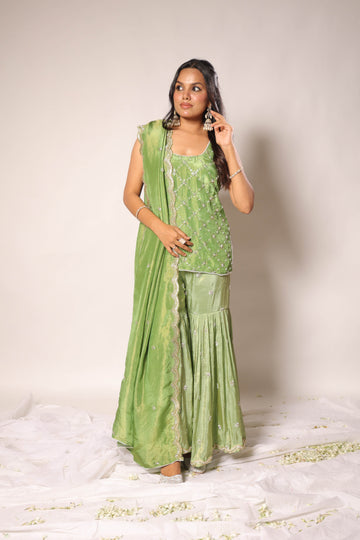
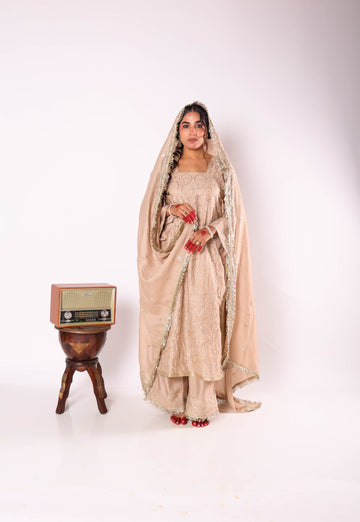
Chanderi: the Gulrang edit
Gulrang is Togaa's chanderi edit, designed for festive days that stretch from morning pujas to evening celebrations:
- Pravya: beige, square neckline, thread and sequin embroidery, flared palazzos
- Harini: olive green, zari and sequin embroidery, flared palazzos
- Kusum: orange, boatneck, floral thread and sequin embroidery, straight pants
- Lavanya: lavender, square neckline with straps, all-over sequin and thread embroidery

Satin: the Lail edit
Lail is Togaa's satin edit: fluid, lustrous sets for weddings and evening celebrations, many with hand-worked lace and silk organza dupattas.
- Nazākat: black satin A-line suit set, mustard silk organza dupatta
- Noorani: mocha satin kurta with hand-embroidered lace, mustard silk organza dupatta
- Ruhani: deep pink satin peplum set, baby pink silk organza dupatta
- Sitaara: olive satin short kurti with dhoti pants, olive organza dupatta
- Saanjh: navy satin suit set, navy silk organza dupatta
Organza: the finishing layer
Across the Lail edit, organza dupattas add a sheer, light finish that balances satin's lustre. It's a pairing we return to because it looks polished and stays comfortable.
A quick buying checklist
Before you add a festive outfit to your cart, run through these questions:
- When and where will I wear it? Daytime and outdoor points to chanderi; evening and indoor points to satin.
- What's the weather likely to be? Heat and humidity favour breathable fabrics.
- How long will I wear it? For a ten-hour wedding day, comfort beats everything.
- Will I wear it again? A versatile colour and fabric gives you more occasions to re-wear it: Diwali, Eid, poojas, family dinners.
- Does it include everything? Check whether the kurta, bottoms and dupatta are all included.
- Can I care for it? If you don't want dry-cleaning bills, choose simpler fabrics for everyday wear and keep embellished pieces for special occasions.
- Does it fit? Check the size chart and, if you're between sizes, ask the brand before ordering.
Final thoughts
There's no single "best" fabric for a kurta set. The best fabric is the one that suits your occasion, your weather and your comfort:
- Choose chanderi for daytime, summer and long functions.
- Choose satin for evenings, winter and a modern, glowing finish.
- Use organza as the dupatta or overlay that adds structure and lightness.
If you'd like help choosing, email support@togaa.in, or browse the Gulrang and Lail edits.
Key takeaways
- Chanderi is a light, breathable handwoven fabric from Chanderi, Madhya Pradesh, with a GI registration for Chanderi sarees.
- Satin is a weave, not a fibre. It's glossy, fluid and best for evening wear, but it snags easily.
- Organza is a thin, crisp, sheer plain weave, ideal for dupattas and overlays.
- For summer and daytime, choose chanderi. For evenings and winter, choose satin.
- Always follow the care label. Dry cleaning is safest for embroidered, zari and sequinned pieces.
Frequently asked questions
Which fabric is best for kurta sets?
It depends on the occasion. Chanderi is best for daytime and summer because it's light and breathable. Satin is best for evening events because of its lustre and drape. Cotton and cotton-silk are best for everyday wear.
What is chanderi fabric?
Chanderi is a light, sheer handwoven fabric from Chanderi in Madhya Pradesh, traditionally woven in pure silk, cotton, or silk-cotton, and known for its soft sheen and zari work.
Is chanderi silk or cotton?
It can be either, or a blend. Chanderi is woven in pure silk, Chanderi cotton, and silk-cotton.
Is chanderi costly?
Chanderi is generally premium but not exclusive. Pure silk, handwoven, zari-heavy and hand-embroidered chanderi costs more, while cotton and silk-cotton chanderi is more affordable.
Is satin good for summer?
Satin is less breathable than chanderi or cotton, so it can feel warm at outdoor summer functions. It's comfortable in air-conditioned venues and cooler months.
Is satin a fabric or a weave?
Satin is a weave. It can be made from silk, polyester or blends, which is why it's worth checking the fibre content.
What is organza used for in Indian wear?
Organza is mostly used for dupattas, sleeves, overlays and borders because it's crisp, sheer and holds shape without adding weight.
What is the difference between organza and chiffon?
Organza is crisp and holds its shape. Chiffon is soft and drapes fluidly. Both are sheer.
How do I wash a satin kurta set?
Follow the care label. Dry cleaning is safest, especially for satin with lace or embroidery. Iron on the reverse on low heat.
How do I store chanderi and organza?
Wrap them in a soft cotton or muslin cloth, keep them away from sunlight and damp, and refold every few months. Roll organza dupattas to avoid sharp creases.
Which is better for a wedding, chanderi or satin?
Choose chanderi for a daytime or summer wedding, and satin for an evening or winter wedding. Both can be dressed up with embroidery and a statement dupatta.
Does satin crease easily?
Satin creases less than cotton or linen, but it can mark and snag. Hang it or fold it loosely with tissue, and steam or iron on the reverse on low heat.


