


By Team Togaa · Updated September 2026 · 16 min read
Quick answer: A sharara is a pair of wide-legged pants that flares out in one continuous line, usually from the waist or the knee. A gharara is fitted down to the knee, where it is joined with a band (often embellished) and then flares dramatically below it. A palazzo is a loose, extremely wide-leg pant that falls straight from the waist without a joint or dramatic flare. Choose a gharara for the most traditional, formal look, a sharara for a festive look that's easy to wear, and palazzos for everyday comfort and relaxed festive wear.
They look similar in photographs, which is why people confuse them. In this guide we explain exactly how the three differ, where each one comes from, how to tell them apart at a glance, which occasions and body types suit each one, and how to style them. We'll also cover related bottoms you'll see in festive wear: the farshi salwar, dhoti pants and the lehenga skirt.

In this guide
- Sharara vs gharara vs palazzo at a glance
- What is a sharara?
- What is a gharara?
- What are palazzo pants?
- How to tell them apart in 10 seconds
- Related bottoms: farshi salwar, dhoti pants and lehenga
- Which is better: sharara or gharara?
- Who should wear a sharara?
- Which occasions suit each style?
- How to style a sharara set
- How to style a palazzo set
- Choosing the right kurta length
- Sharara vs lehenga: which should you choose?
- Best fabrics for shararas, ghararas and palazzos
- Colour ideas by occasion
- Common styling mistakes to avoid
- Fit and sizing tips
- One sharara set, many looks
- Dressing for the season
- Frequently asked questions
Sharara vs gharara vs palazzo at a glance
| Sharara | Gharara | Palazzo | |
|---|---|---|---|
| Silhouette | Wide from waist or knee, one continuous flare | Fitted to the knee, then a dramatic flare | Loose, wide leg from the waist, falls straight |
| Knee joint | No | Yes, a band at the knee (often embellished) | No |
| Volume | Medium to high | Highest | Low to medium |
| Formality | Festive | Most traditional and formal | Everyday to festive |
| Ease of wear | Easy | Needs a little practice | Easiest |
| Typical kurta | Short to mid-length kurta | Short kurta or kurti | Any length, often long |
| Best for | Mehendi, sangeet, festive days | Weddings, nikah, formal functions | Everyday, office, day functions |
What is a sharara?
A sharara is a pair of wide-legged trousers that flares out in a single, continuous line. Depending on the design, the flare can start at the waist, the hip or the knee, but there is no seam or band dividing the leg into two parts. When you stand still, a sharara can look almost like a skirt. When you walk, it moves like one.
The sharara is closely associated with the courtly fashion of North India, particularly the Awadh region around Lucknow, and it has been a festive favourite for generations. Today it's one of the most popular choices for pre-wedding functions because it's festive, photographs beautifully, and is surprisingly comfortable.
What a sharara set includes
A sharara set typically has three pieces:
- A kurta or kurti, usually short to mid-length so that the flare of the sharara is visible
- Sharara pants
- A dupatta, the long scarf that completes most traditional Indian outfits
Why people love shararas
- Comfortable to sit in. Great for long mehendi functions where you're seated for hours.
- Easy to dance in. The wide legs move freely.
- Festive without being heavy. A sharara set looks celebratory without the weight of a full lehenga.
- Flattering on most body types. The flare balances the silhouette.
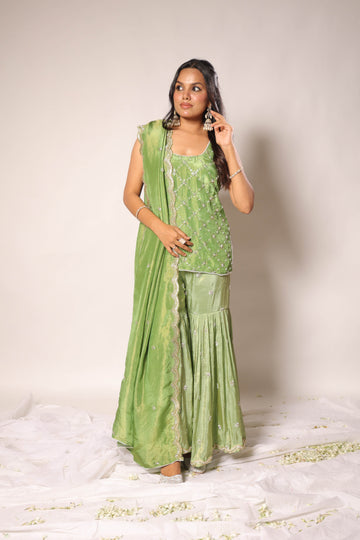
Togaa's Mahi is a sharara set: a green straight kurta with a round neckline and thread and sequin embroidery, paired with flared sharara palazzos and a dupatta with a scalloped border.
What is a gharara?
A gharara is a traditional Lucknowi outfit. Wikipedia describes it as consisting of a kurti, a dupatta and, most importantly, a pair of wide-legged pants that are ruched at the knee so they flare out dramatically below it.
The defining feature: the knee joint
What makes a gharara a gharara is the joint at the knee. The upper part of each leg is fitted, and at the knee it's joined to a very full, flared lower section. This joint is often covered with an embellished band. The knee area, called the gota, is often elaborately embroidered in zari and zardozi, a type of heavy metallic embroidery.
How much fabric goes into a gharara?
A traditional gharara uses an enormous amount of fabric. According to Wikipedia, each leg of a traditional gharara is made from over 12 metres of fabric, often silk brocade. That's why ghararas are so voluminous, so dramatic, and often so heavy.
Where you'll see ghararas
Ghararas are traditionally worn by brides and guests at weddings in the Hindi-Urdu belt of North India, particularly in Lucknow, and they remain a formal, traditional choice for weddings and nikahs.
What are palazzo pants?
Palazzo pants are long trousers cut with a loose, extremely wide leg that flares out from the waist. Unlike a sharara, they don't usually have a dramatic, skirt-like flare, and unlike a gharara they have no knee joint.
Why palazzos are so popular
- Comfort. Palazzos are the easiest of the three to wear, especially in hot weather.
- Versatility. They pair with long kurtas, short kurtis, peplum tops and even western tops.
- Everyday to festive. In cotton they're everyday wear; in satin or with embroidery, they're festive.
Palazzo suit sets have become a modern staple of Indian wardrobes, bridging everyday and festive wear. Togaa's Anaya, a rich blue spaghetti-strap kurta with white-gold lace, matching palazzos and a lace-bordered dupatta, is a good example of how palazzos can look polished for evening festivities.

Why the difference matters when you shop online
Product listings don't always use these words precisely. Some brands call any wide pant a "sharara", and some call a knee-flared sharara a "gharara". Before you buy, zoom in on the product photos and check three things: whether there's a band at the knee, how much the leg flares, and where the flare begins. Read the "What's included" section too, so you know whether the dupatta and kurta come with the set. A minute of checking can save you an exchange.
How to tell them apart in 10 seconds
Look at the knee and the flare:
- Is there a band or seam at the knee? If yes, it's a gharara.
- No knee joint, but a big, skirt-like flare? It's a sharara.
- No knee joint, wide but falls fairly straight? It's a palazzo.
A useful memory trick: gharara has a "gathered" knee; sharara spreads; palazzos are pants.
Related bottoms: farshi salwar, dhoti pants and lehenga
Festive wear includes a few other bottoms that are often confused with shararas and ghararas.
Farshi salwar
A farshi salwar is a very wide, floor-length salwar that flows from the waist and grazes the floor. "Farsh" means floor, which describes how it sweeps the ground. It's related to the traditional salwar of the salwar kameez, but far fuller. Togaa's Reet pairs a green V-neck kurta with flared sleeves and contrast pink piping with a green farshi salwar and a pink lace-detailed dupatta.

Dhoti pants
Dhoti pants take inspiration from the traditional dhoti: they're pleated and draped at the front and taper towards the ankle. They're an Indo-western favourite for sangeets and haldis because they're comfortable, modern and easy to dance in. Togaa's Sitaara pairs an olive satin short kurti with satin dhoti pants.
Lehenga
A lehenga is an ankle-length skirt, usually worn with a blouse (choli) and dupatta. It's not a pant at all, but from a distance a very full sharara can look similar. If you want the drama of a lehenga with the ease of pants, a sharara is a great middle ground.
Which is better: sharara or gharara?
"Which is better, a sharara or a gharara?" is one of the questions people search most. Neither is better overall. It depends on what you want.
Choose a gharara if:
- You want the most traditional, formal look
- You're dressing for a wedding, nikah or formal family function
- You're comfortable with more fabric and weight
- You love heavy embellishment at the knee
Choose a sharara if:
- You want a festive look that's easier to wear all day
- You're dressing for a mehendi, sangeet or festive gathering
- You want to sit, walk and dance comfortably
- You want something that also feels modern
For most wedding guests attending multiple functions, a sharara set is the more versatile choice. A gharara is a statement piece for a specific formal occasion.
Who should wear a sharara?
Another common question is "who should wear a sharara?" The honest answer is: almost anyone. Shararas are forgiving and flattering. A few tips help you choose the right one:
- If you're petite: choose a sharara that flares from the knee rather than the waist, pair it with a shorter kurta, and wear block heels. This keeps your proportions balanced.
- If you're tall: you can carry a full, waist-flared sharara and a longer kurta beautifully.
- If you prefer to balance wider hips: a sharara's flare evens out the silhouette. Pair it with a straight or A-line kurta that skims rather than clings.
- If you want to look taller: choose the same colour for kurta and sharara. A continuous colour line elongates.
Which occasions suit each style?
| Occasion | Sharara | Gharara | Palazzo |
|---|---|---|---|
| Haldi | Good | Too formal | Great |
| Mehendi | Great | Good | Good |
| Sangeet | Great | Good | Good |
| Wedding ceremony | Good | Great | Good if embellished |
| Nikah | Good | Great | Fine for guests |
| Reception | Good | Good | Good in satin or with embroidery |
| Eid, Diwali, festivals | Great | Good | Great |
| Office festive day | Too festive | Too formal | Great |
For a full breakdown of what to wear at each wedding function, read our guide to dressing as an Indian wedding guest.
How to style a sharara set
Jewellery
Most sharara sets have a strong neckline or embroidered kurta, so you usually don't need a heavy necklace. Statement jhumkas or chandbalis are the classic pairing. Add a maang tikka for a more traditional look at a wedding.
Footwear
- Block heels keep the hem off the floor and are comfortable for long functions.
- Juttis and mojaris are comfortable and traditional, best with ankle-length shararas.
- Embellished sandals work for evening functions.
Make sure your sharara doesn't drag on the ground with the shoes you'll actually wear. Try the outfit on with your footwear before the event.
Dupatta drapes
- Over one shoulder: modern and practical, especially for dancing.
- Both shoulders, draped at the back: traditional and elegant.
- Pinned at the shoulder and flowing: secure for long events.
Hair and makeup
Loose waves, a sleek low bun or a side braid all work. For a mehendi, keep makeup fresh and dewy; for a sangeet, go a little bolder.
How to style a palazzo set
Palazzo sets are the most versatile of the three, so styling depends on the occasion:
- Everyday: a cotton palazzo set with flats, minimal jewellery and a tote.
- Office festive day: a chanderi or cotton-silk palazzo set with small studs or jhumkas and juttis.
- Evening festive: a satin or embroidered palazzo set with statement earrings and metallic heels.
- Wedding functions: an embroidered palazzo set with a heavier dupatta and a potli bag.
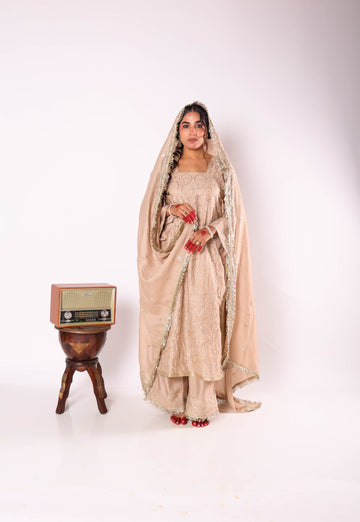
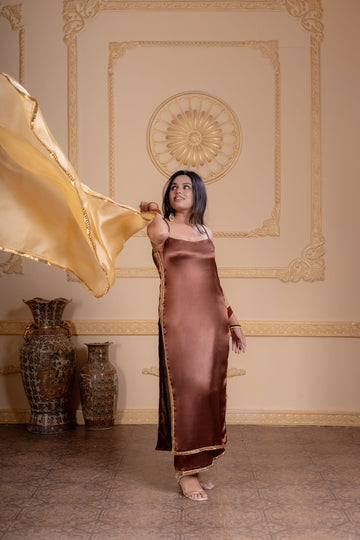
Togaa's Muski is a festive palazzo set: a rose pink one-shoulder kurta with floral thread and sequin embroidery and wide flared palazzos, made for cocktail mehendis and sangeets. Noorani pairs a mocha satin kurta with flared satin palazzos with matching hand-embroidered lace.

Choosing the right kurta length
Kurta length changes how a sharara, gharara or palazzo looks.
- Short kurti (hip-length): shows off the full flare of a sharara or gharara. Classic for ghararas.
- Mid-length kurta (thigh to knee): balanced and versatile, the most common choice for sharara sets.
- Long kurta (below the knee): best with palazzos, which don't need their flare to be visible.
- Peplum tops: a modern alternative that pairs beautifully with palazzos and shararas. See our guide to styling a peplum kurta.
Sharara vs lehenga: which should you choose?
Many people choosing a festive outfit end up deciding between a sharara set and a lehenga. They can create a similar, full silhouette, but they wear very differently.
| Sharara set | Lehenga | |
|---|---|---|
| Structure | Pants with a wide flare | A full skirt |
| Weight | Usually lighter | Often heavier, especially with can-can or heavy embroidery |
| Movement | Easy to walk, sit and dance | Beautiful when twirling, but can be harder to manage on stairs |
| Formality | Festive | Festive to bridal |
| Best for | Mehendi, sangeet, festivals | Sangeet, wedding, reception |
If you want the drama of a lehenga but need to be on your feet all day, a sharara is a smart compromise. If the invitation calls for your most formal look, a lehenga or anarkali is the safer choice. Our anarkali vs lehenga vs kurta set guide compares the formal options in more detail.
Best fabrics for shararas, ghararas and palazzos
The fabric changes how these bottoms fall and move.
- Satin: fluid and lustrous. Satin shararas and palazzos swing beautifully and suit evening functions.
- Chanderi and silk: lighter, with more body. Good for daytime festive wear.
- Georgette: soft and flowing, one of the most common fabrics for shararas because it creates a graceful drape.
- Brocade: heavy and structured, traditional for ghararas.
- Cotton and cotton blends: breathable and practical, best for everyday palazzos and daytime functions.
- Embroidered or sequinned fabrics: add weight and sparkle for weddings and evening events.
As a general rule: the more fabric in the flare, the more a lightweight, fluid fabric helps. A heavy brocade sharara can become tiring to wear over a long day.
Colour ideas by occasion
- Mehendi: green, pink, yellow and mint. A green sharara set like Mahi is a classic.
- Haldi: yellow, mustard, olive and orange.
- Sangeet: jewel tones, metallics, and bold pinks, like Muski.
- Wedding ceremony: rich reds (if the bride isn't wearing red), maroons, golds and deep greens.
- Day functions: ivory with colour accents, pastels and soft blues.
- Evening parties and receptions: navy, black (if the family is comfortable), wine and emerald.
Common styling mistakes to avoid
- Hem too long: a sharara or palazzo that drags becomes dirty and is a tripping hazard. Hem it to your footwear.
- Kurta too long for a sharara: a very long kurta hides the flare you paid for.
- Too much jewellery: an embroidered kurta and dupatta rarely need a heavy necklace as well.
- Wrong footwear: stilettos sink into lawns; choose block heels or juttis for outdoor venues.
- Unsecured dupatta: pin it if you plan to dance.
Fit and sizing tips
A great fit makes a sharara or palazzo look expensive. Keep these in mind:
- Length matters most. The hem should just skim the top of your shoes.
- Waist fit. Most shararas and palazzos have an elasticated or drawstring waist. Check the waist measurement on the size chart.
- Kurta fit. The kurta should skim your body at the shoulders and bust without pulling.
- Check the size chart before ordering. Measure yourself and compare with the brand's chart. Togaa's size chart covers sizes XS to XXL.
- Between sizes? Contact the brand before ordering. At Togaa, you can email support@togaa.in and we'll help you choose.
Caring for shararas, ghararas and palazzos
Voluminous bottoms need a little extra care:
- Follow the care label. Embroidered and sequinned pieces are safest dry cleaned.
- Hang shararas and ghararas to prevent heavy creases in the flare.
- Steam before wearing to bring back the flow of the fabric.
- Store embroidered pieces with tissue between folds to protect the embroidery.
For fabric-specific tips, read our chanderi vs satin vs organza guide.
One sharara set, many looks
A good sharara or palazzo set earns its place in your wardrobe when you can wear it more than once. Here's how to re-style a single set for different occasions:
- Mehendi: wear the full set with the matching dupatta, jhumkas and a braid with flowers.
- Sangeet: swap the dupatta for a contrasting organza or sequinned one, add metallic heels and a sleek ponytail.
- Festival at home: wear the kurta and sharara without the dupatta, with small earrings and juttis.
- Family dinner: pair the sharara or palazzo with a plain short kurta or a simple top, and let the bottoms be the statement.
- Another wedding next season: change the jewellery, the dupatta drape and the hairstyle, and it will look like a different outfit.
This is also why a versatile colour (green, pink, ivory, navy) often gives better value than a very trend-specific shade.
Dressing for the season
- Summer: choose lighter fabrics like chanderi, cotton-silk or lightweight satin, and palazzos over full shararas for outdoor daytime events. Keep embroidery light.
- Monsoon: avoid floor-sweeping hems. A slightly shorter sharara or palazzo, or dhoti pants, stays cleaner.
- Winter: heavier embroidery, velvet dupattas and satin shararas work well. Layer a shawl or embroidered jacket for outdoor evening functions.
Bags and finishing touches
A potli (a small drawstring pouch) is the classic partner for sharara and gharara sets and leaves your hands free. A small box clutch works for receptions. Keep the bag in a tone that picks up a colour from your dupatta or embroidery. A light fragrance, a small safety-pin kit for your dupatta, and a pair of flats in your bag will make a long function much easier.
Final thoughts
Sharara, gharara and palazzo each have their place. A gharara is a traditional statement for formal occasions. A sharara is the festive all-rounder that suits mehendis, sangeets and celebrations. Palazzos are the everyday-to-festive staple that you'll reach for again and again.
Explore Togaa's sharara and palazzo sets in the Moh edit and the Saadgi edit, or read our FAQs for sizing and delivery information.
Key takeaways
- A sharara flares in one continuous line; a gharara is fitted to the knee and flares below a joint; palazzos are wide, straight-falling pants.
- Ghararas are the most traditional and formal; shararas are the most versatile for festive wear; palazzos are the easiest to wear.
- Traditional ghararas can use over 12 metres of fabric per leg.
- Petite frames suit knee-flared shararas with shorter kurtas and block heels.
- Always try your outfit on with the shoes you'll wear so the hem sits right.
Frequently asked questions
What is the difference between a sharara and a gharara?
A sharara flares out in one continuous line from the waist or knee. A gharara is fitted to the knee, where it's joined with a band, and then flares out dramatically below it.
What is the difference between a sharara and a palazzo?
Both are wide-legged, but a sharara has a much fuller, skirt-like flare, while a palazzo is a loose, wide pant that falls relatively straight from the waist.
Which is better, a sharara or a gharara?
Neither is better overall. A gharara is more traditional and formal; a sharara is easier to wear and more versatile for festive functions.
Who should wear a sharara?
Almost anyone. Petite women can choose knee-flared shararas with shorter kurtas; taller women can carry fuller, waist-flared styles.
Can I wear a sharara to a wedding?
Yes. Shararas are a popular choice for mehendis, sangeets and wedding functions, especially in embroidered fabrics with a matching dupatta.
What is a farshi salwar?
A farshi salwar is a very wide, floor-length salwar that flows from the waist and grazes the floor.
Are palazzo pants suitable for festive wear?
Yes. In satin, chanderi or with embroidery and a matching dupatta, palazzo sets are suitable for festive occasions and many wedding functions.
What footwear goes with a sharara set?
Block heels, juttis, mojaris or embellished sandals. Try the outfit with your shoes so the hem just skims the top of your feet.
What length kurta should I wear with a sharara?
A short to mid-length kurta shows off the sharara's flare best. Long kurtas suit palazzos better.
How much fabric is used in a gharara?
A traditional gharara can use over 12 metres of fabric per leg, often silk brocade, which is why it's so voluminous.
Is a sharara comfortable for a long function?
Yes. Shararas are wide and flowing, so they're comfortable to sit, walk and dance in, especially in lightweight fabrics like satin or georgette.
Can I wear a sharara set again after the wedding?
Yes. Re-style it with a different dupatta, jewellery and hairstyle, or pair the sharara with a simple top for a family dinner or festival.
Are ghararas heavy to wear?
Traditional ghararas can be heavy because they use a lot of fabric and heavy embroidery at the knee. Lighter modern versions are easier to wear all day.


